Ceramic Coating vs. PPF: Which One Does Your Car Actually Need?
Ceramic coating vs. paint protection film (PPF), explained — what each protects against, what they cost in Kingston, and when it makes sense to get both.
By Limestone Car Detailing · Updated
Key Takeaways
- PPF is a physical film that absorbs stone chips; ceramic coating is a hard chemical layer that won't stop chips.
- Ceramic coating is about gloss, UV protection and easy washing; PPF is about impact protection.
- Highway commuters benefit most from PPF on the front end; almost everyone benefits from a coating.
- Many owners use both: PPF on high-impact areas, ceramic coating over everything.
Ceramic coating and paint protection film (PPF) get mixed up constantly, and plenty of people end up paying for the wrong one. They're both “paint protection”, but they protect against completely different things. Here's the difference, honestly explained.
What ceramic coating is (and isn't)
A ceramic coating is a liquid that bonds chemically to your clear coat and cures into a hard, glossy layer. It makes the surface hydrophobic — water beads and rolls off, carrying dirt with it — and protects against UV fading, chemical staining, bird droppings, tree sap and minor swirling.
What it won't do is stop a rock chip. The layer is microscopically thin. If a stone hits the hood at highway speed, a coating doesn't absorb that impact. Anyone who tells you otherwise is overselling it.
What PPF is
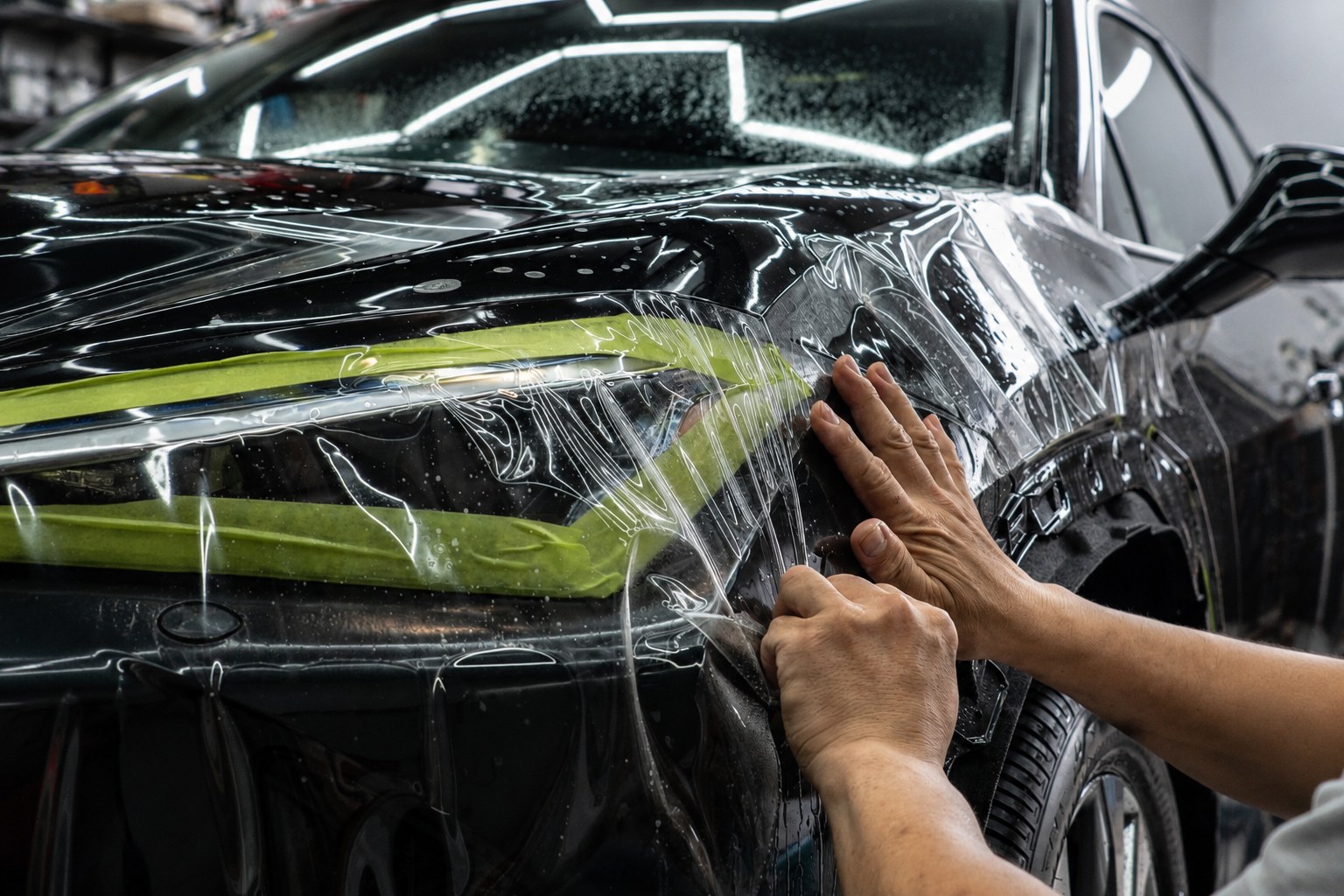
Paint protection film is a clear, thick urethane film installed over the paint. It's built to take impacts — stone chips, road debris, light scuffs — so your factory paint doesn't. Quality film also has a self-healing topcoat: light swirls and scratches disappear with heat from the sun or warm water.
Side by side
- Stone chips: PPF absorbs them; a ceramic coating does not.
- Gloss and slickness: a ceramic coating adds a deep, slick gloss; PPF looks like your paint, slightly enhanced.
- Easy washing: a coating makes the paint hydrophobic and self-cleaning-ish; PPF on its own is less so.
- UV and chemical protection: both help.
- Coverage: a coating usually goes on the whole vehicle; PPF is often installed on high-impact areas only.
What they cost
At Limestone, ceramic coating packages start at $599 for Bronze (1-year protection) and run to $1,599 for Ultimate (7+ years). Every package includes single-stage paint correction so the coating bonds to clean, corrected paint. See the full ceramic coating packages.
PPF is priced by coverage: Hood & Bumper from $699, Partial Front from $999, Full Front — our most popular — from $1,799, Track Package from $1,999 and Full Body from $3,500. See the PPF coverage options.
Which one should you choose?
Choose PPF if…
- You drive the 401 regularly — say, commuting from Napanee, Odessa or Gananoque.
- You have a new car or a dark colour where every chip shows.
- You care most about keeping the original paint flawless for resale.
Choose ceramic coating if…
- You mostly drive around town and want a deep gloss that's easy to keep clean.
- Winter salt, summer sun, sap and bird droppings are your main concerns.
- You want protection across the whole vehicle at a lower cost than full-body film.
Get both if…
This is the most common combination we install: PPF on the high-impact front end and a ceramic coating over the rest (and over the film itself). You get chip protection where the impacts happen and slick, easy-wash protection everywhere else.
Still deciding? Send us a quick question about your vehicle and how you drive, and we'll tell you honestly which option makes sense — even if that's the cheaper one.
Related Services
Serving Kingston and Amherstview, Bath, Odessa, Napanee, Gananoque, Sydenham, Harrowsmith, Inverary, Battersea and Yarker.